It's not just a bottle: How DiFOLD folds architecture, design, and business?
"Entrepreneurship is not a role that you switch on in the morning and switch off in the evening."
The story of DiFOLD begins with the people behind the product—an architect who thinks in folds and a strategist who thinks in next steps. For Peter and Radina, business is not separate from life, but a natural extension of their values, curiosity, and personal choices. The result is clear: international recognition, patents, awards from prestigious institutions, and, most importantly, trust from consumers themselves.
Name
Location
Category
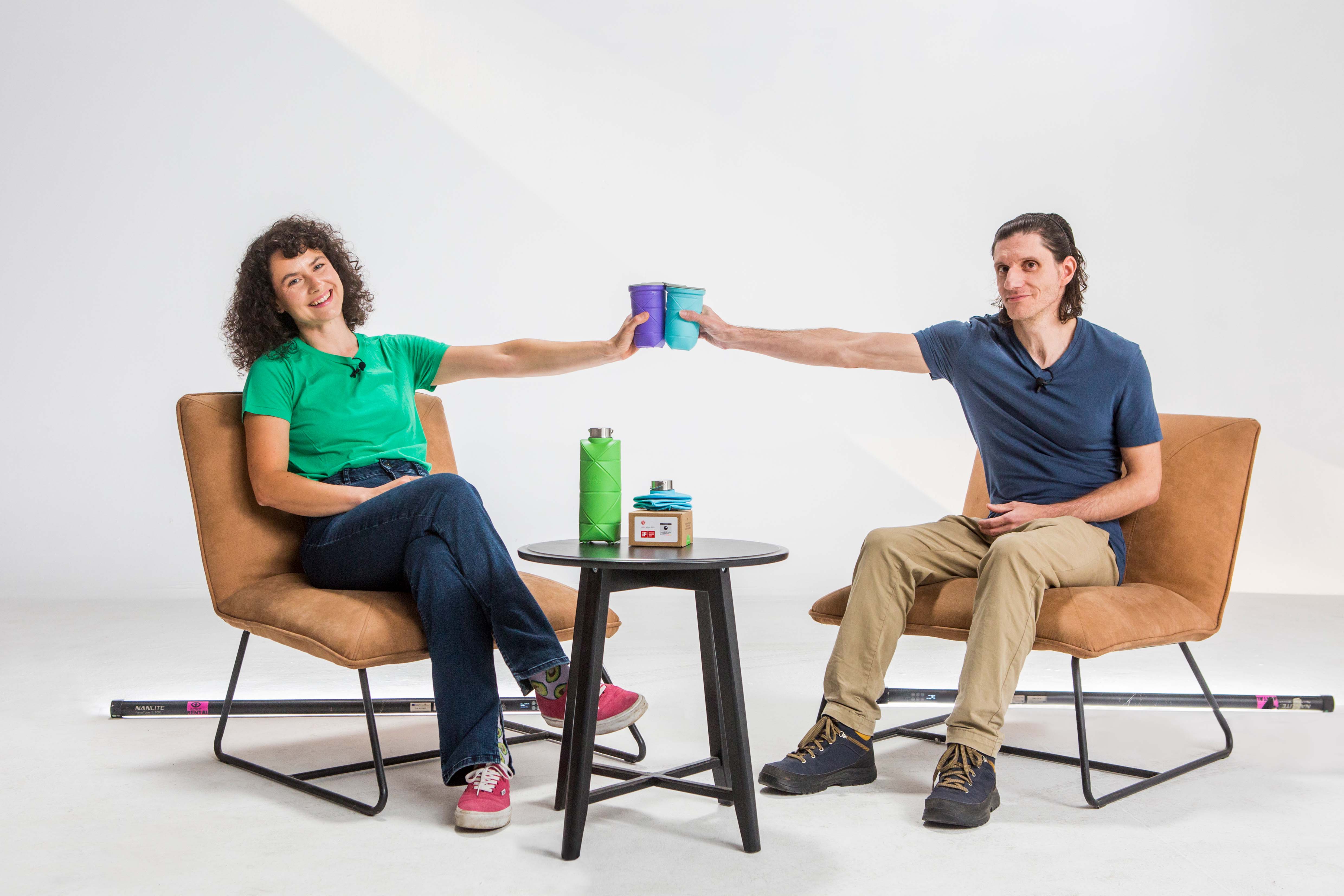
For Peter and Radina, the line between personal and professional has long been blurred. Peter, an architect by education and an introvert by nature, thinks in terms of systems, assemblies, and principles – whether it's spatial structures or sound design in electronic music, which he has been experimenting with lately. For him, everything starts with curiosity about form and ends with the search for something that has not been done this way before.
Radina is constantly on the move – geographically and conceptually. Education in the UK, a career in advertising in Bulgaria, a master's degree in innovation and entrepreneurship in Barcelona, start-up experience in Berlin. Her return to Bulgaria is not an act of nostalgia, but a logical next step when she meets Peter and his discovery of abstract foldable designs. At that point, there was no bottle or cup yet – only potential.
DiFOLD was born precisely in this space of exploration. Peter's architectural thinking and Radina's strategic perspective converged around an idea that initially had no clear application but was based on a strong principle. That turned out to be enough.
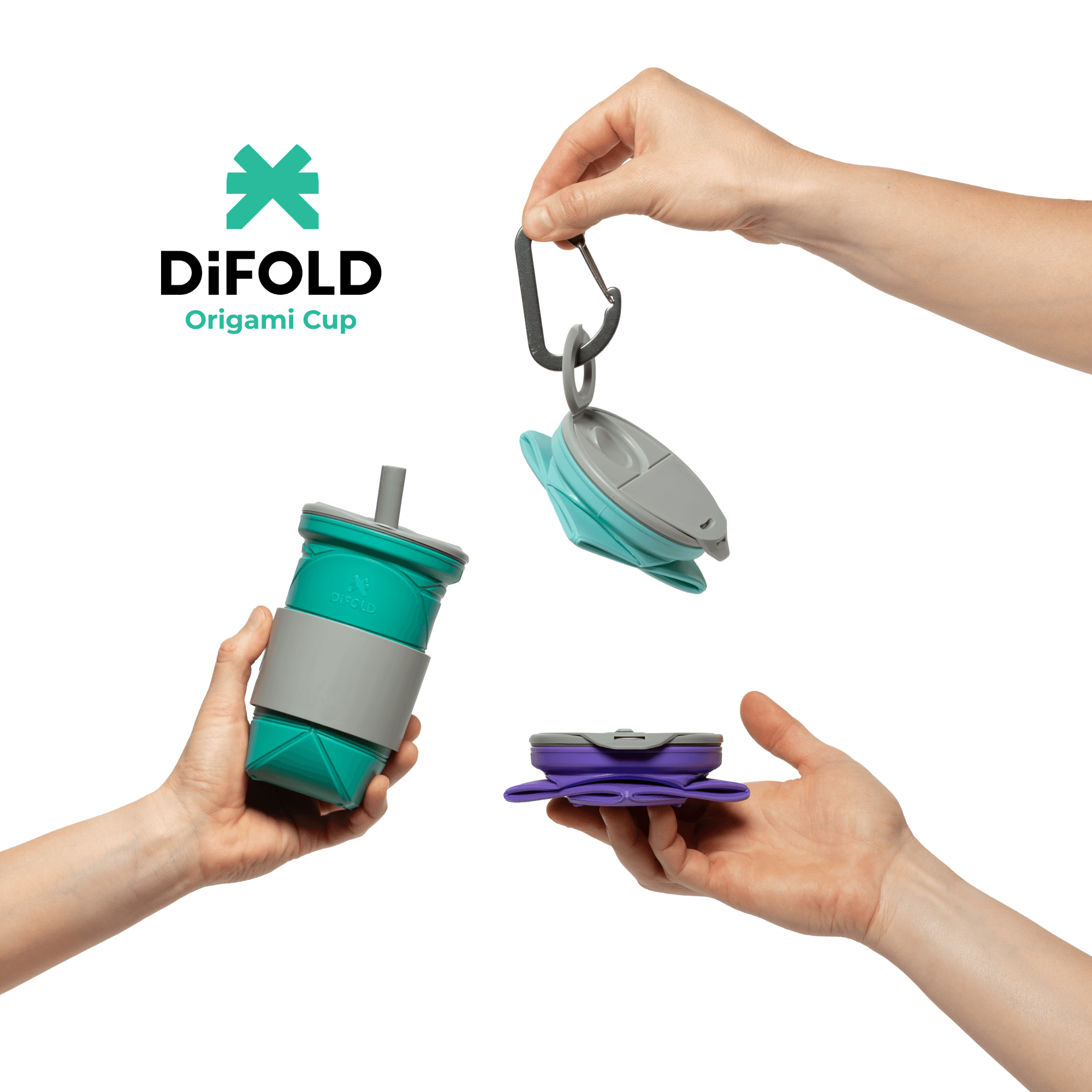
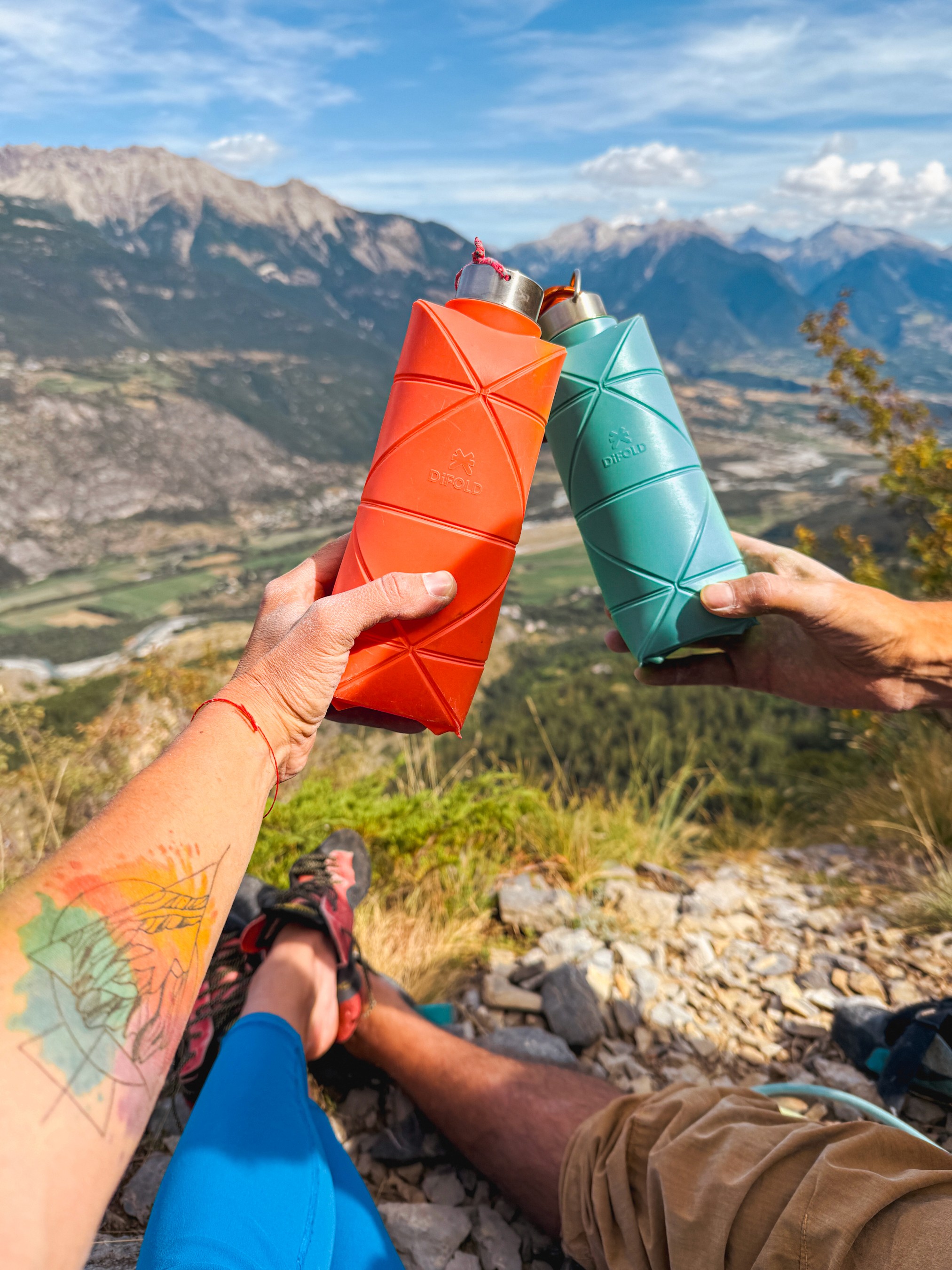
The invention behind DiFOLD did not start with the idea of a foldable bottle, but with the search for better modular structures for architecture. Peter came across kirigami, a technique in which a flat surface is transformed into a three-dimensional one through cuts. After a series of experiments, a system of geometric folding patterns was born, which could be applied to various cylindrical shapes and products. It turned out that this principle was not only unpatented, but also had potential far beyond the initial idea.
The real challenge came after the "eureka" moment: prototyping, materials, and mass production. Aesthetics and function go hand in hand, but sustainability requires compromises and iterations. From bio-based materials to polypropylene-based ones, DiFOLD goes through versions that become increasingly durable, reliable, and suitable for everyday use. The goal remains simple: a product that folds into your pocket and works in as many situations as possible.
The geometric system demonstrates enough originality to be protected by patents in both Europe and the United States. At the same time, it is versatile enough to be applied to a wider range of foldable products. This is a rare combination that does not go unnoticed. It has been recognized by some of the most prestigious international competitions in the field of design and sustainable innovation – the Red Dot Design Award, the iF Design Award, and the German Sustainability Award for Design. These are not just awards, but a clear message: functional minimalism and sustainability can be a global standard, not a niche alternative.
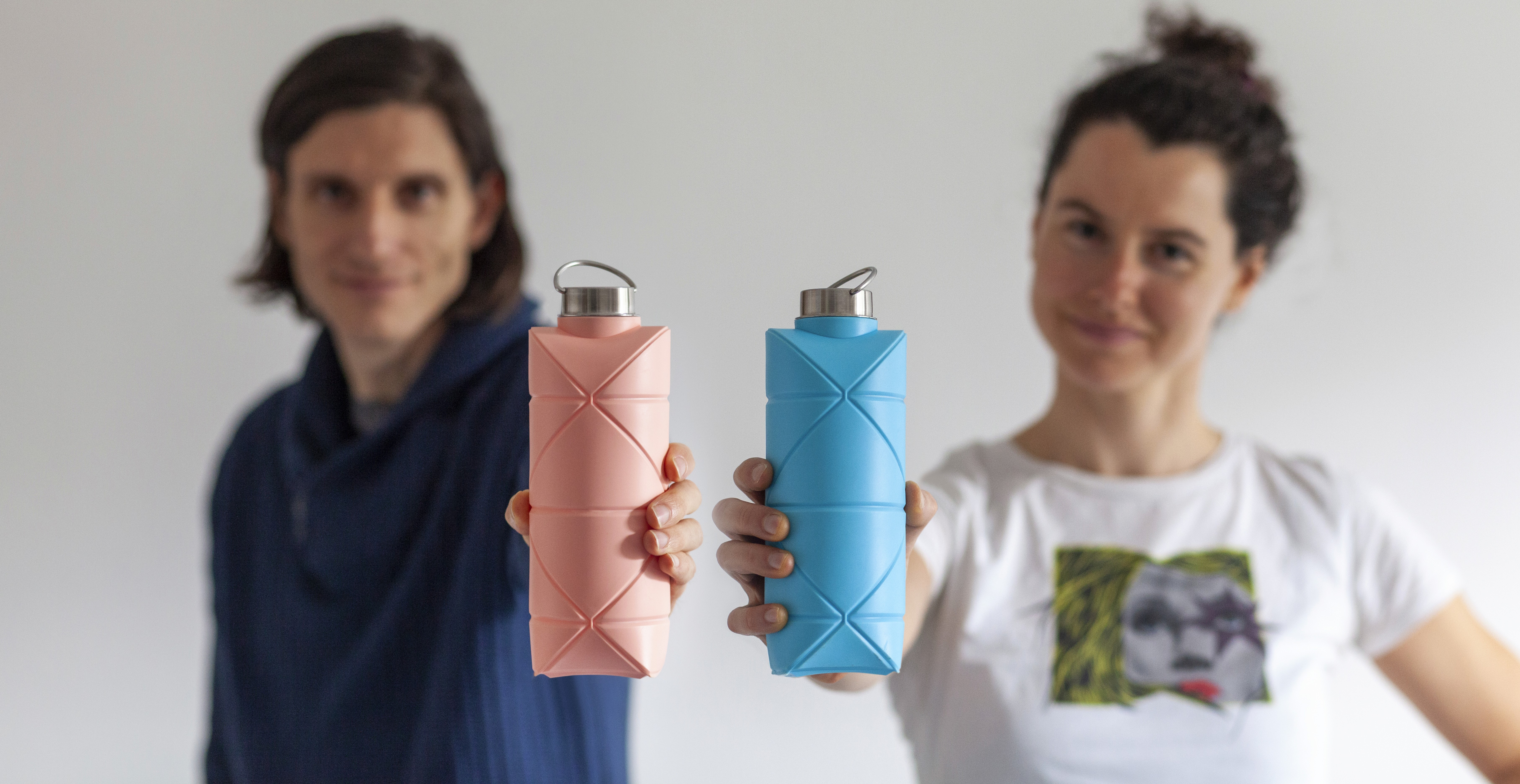
This belief is most strongly reinforced in moments of uncertainty – when decisions are not obvious, and time and resources are working against you. For Peter and Radina, it is precisely these periods that shape the culture of DiFOLD: calmness instead of panic, searching for solutions instead of blame, and perseverance even when the results are not immediately apparent.
This philosophy is also reflected in the way DiFOLD encounters reality outside the studio. Instead of relying solely on institutional approval, the team chooses to test their idea directly with people. The Kickstarter campaigns became a huge success – thousands of supporters from dozens of countries backed the Origami Bottle (2020) and Origami Cup (2024), financially supporting their production. This trust is invaluable: proof that a well-formulated idea and proper execution can bring together a global community.
After Origami Bottle's first Kickstarter campaign came the hardest part: production challenges, uncertainty, long waits, and a lack of clear answers. It was then that Peter and Radina realized how crucial stoicism and trust between them were. In the Bulgarian entrepreneurial environment, where physical products are rarely attractive to investors, they managed to raise capital, but not without struggling with external uncertainty and the high cost of risk.
Today, both talk about growth – not only in business, but also personal growth. From financial literacy and respect for marketing to the ability to not panic when you don't know something, DiFOLD is an example of a modern Bulgarian brand that relies not on naive optimism, but on consistency, functional design, and clear values.
And perhaps it is precisely in this fusion of realism and vision that the future of modern business in our country lies.