From New York to Sofia: How the bagel became "Obred"
Recently, the idea of bagels in Sofia felt like a quirky import – something your friend could brag about after a trip to Brooklyn. But hidden in the old Jewish quarter of Sofia, under the linden trees and sunny facades, something cool rises: Obred.
A minimalist, industrial, and almost Scandinavian place - Obred does not just serve bagels; it offers color, warmth, comfort, and atmosphere. And yes, it is as delicious as it is visionary.
Name
Location
Category
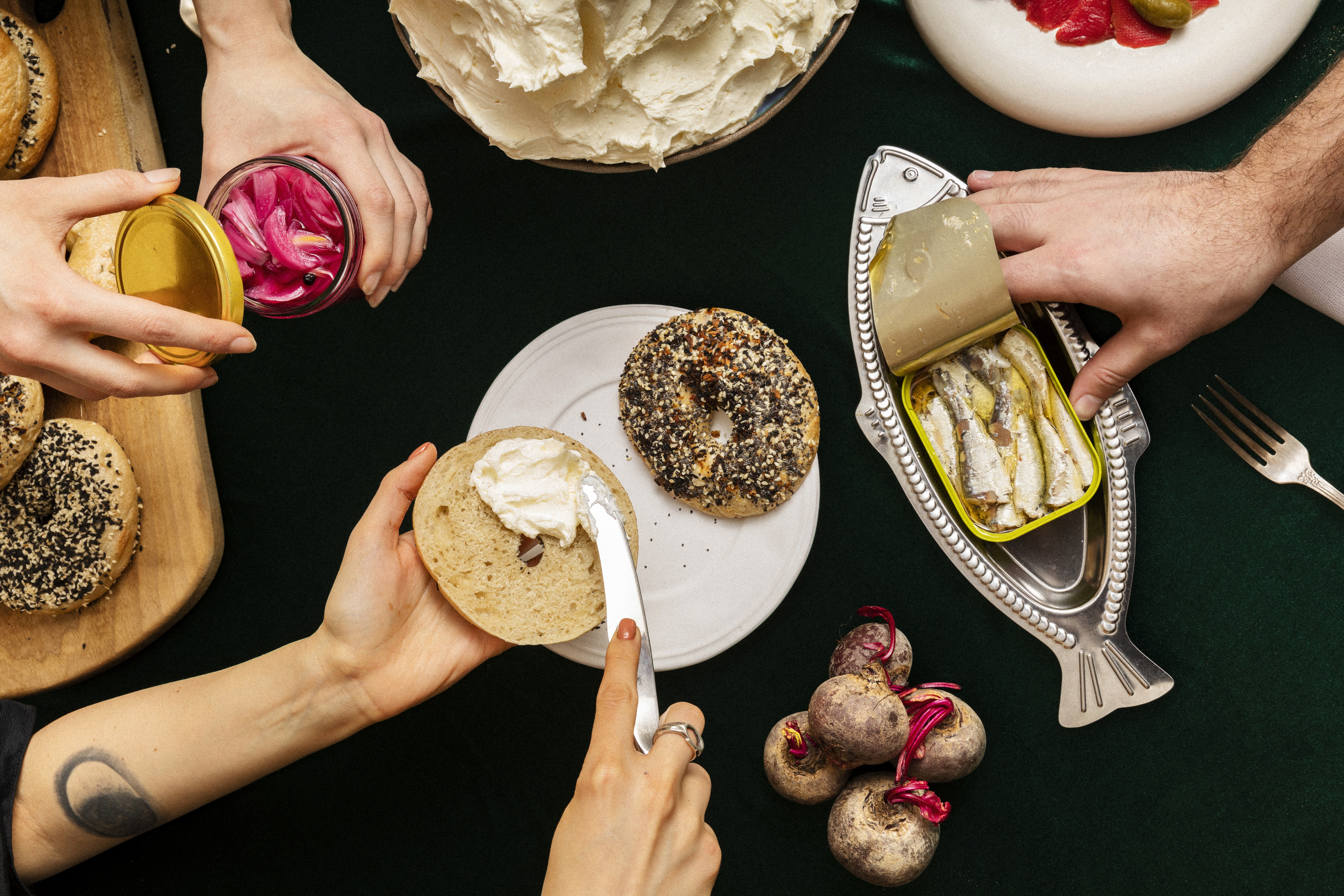
The story begins in New York, where the bagel is not just food, but a cultural symbol — like coffee in Italy or falafel in Tel Aviv. Gabi (the owner) lives there when she gets to know Jewish cuisine not from a cookbook, but from life — from the bakeries in Brooklyn and the traditions of her roommate. There, curiosity about the story behind the “babka” and “halla,” about the roots of something that is now on the menu of every café between Williamsburg and Chelsea, is born.
When the pandemic brings her back to Sofia, the lack is not just cultural. She misses the taste — that slightly sweet, chewy, juicy baked bagel, which is eaten in the morning with cream cheese, and at lunch with smoked fish. And so, out of necessity and nostalgia, an idea is born. She starts to knead dough herself. Not with industrial yeast, but with sourdough. Not with compromises, but with principles. The belief that good food can also be a personal ritual becomes a philosophy.

In Obred, you will find neither Italian panchetta nor Norwegian salmon. Instead — marinated trout from Bulgarian waters, farm-fresh strained yogurt, goat cheese, free-range eggs. Every item on the menu is carefully selected — not for trend, but for honesty towards the product and the place. Gabi and Alex (collaborator) build relationships with local producers and farms to ensure quality, sustainability, and a real connection to the terroir of Bulgaria.
This approach is not easy. It requires communication, logistics, patience. But the result is evident — not only in the food but also in the feeling that you are not eating something “trendy,” but something significant. For Obred, food is not just a stomach experience; it is a cultural gesture.
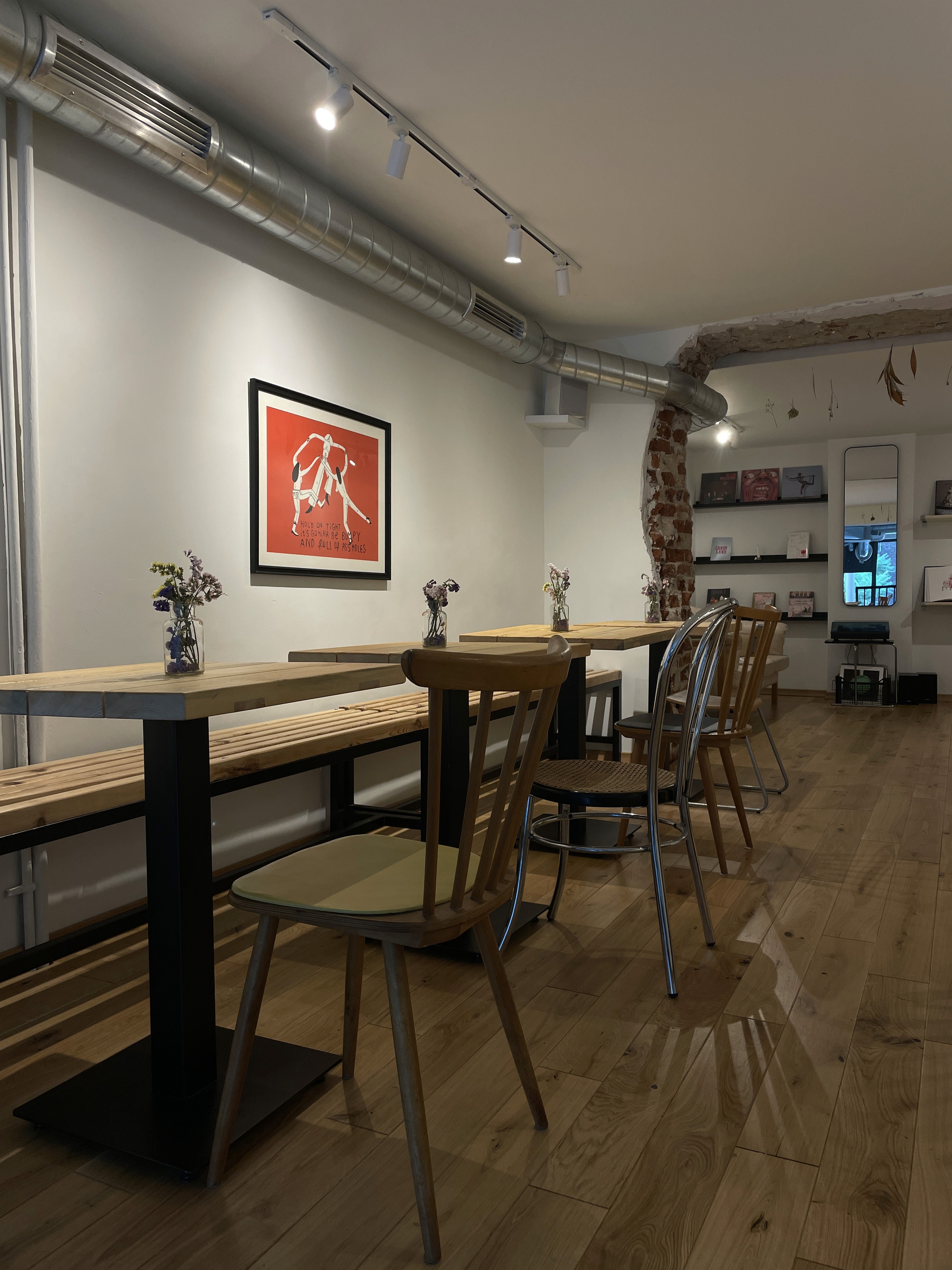
The design of Obred is a true continuation of this idea – white walls, industrial lamps, warm wooden elements, and illustrations from local artists. Some of the furniture is restored from second-hand sources, while others are created by friends. This is not a space of consumerism, but of belonging. People come not just for breakfast, but to sit, read, and meet.
That’s why Obred not only functions well on Instagram – it exists organically within it. Without powdered marketing strategies, but with real stories from the kitchen, shared as from a friend. This builds community. This transforms the place into more than a business – into a cultural point of contemporary Sofia.
And if New York has always been the city that dictates what is the new “old” from the world, then Obred proves that Sofia can be a city that returns to itself – through sourdough, through locality, through a taste that carries history. After all, this is not just a story about a bagel. This is a story about how culture travels, how it transforms, and how a taste can return home – in a new way, but with deep respect for the past.