
Personality
Calling
Local historian
Category
Personalities
"My great pain is the disappearance of the book market on Slaveykov Square."
Viktor Topalov grew up in Lyulin, the largest residential complex in Bulgaria. He has heard all the jokes about the neighborhood and still loves it. The fields where he and his friends used to play football have long since disappeared beneath new apartment buildings or been turned into parking lots. The neighborhood has changed, but Viktor has not abandoned it either physically or emotionally. He has simply learned to see potential where others see only the gray.
But if “Lyulin” shaped his childhood, then “Petko R. Slaveykov” Square shaped his mind. There, from bookstores and newsstands, he bought his first books, textbooks, CDs, and even football player stickers: that collection of small items around which a child’s personality is built. Later, when he was a student at the French High School, the market was a daily sight along his route. It was there that he bought his first books about Sofia, without realizing at the time that studying the history of his hometown would come to play such an important role in his life.
Today, the book market on Slaveykov Street is nothing but a memory. It is precisely this loss, says Victor, that hurts in a special way—not as nostalgia, but as a severed thread between generations.

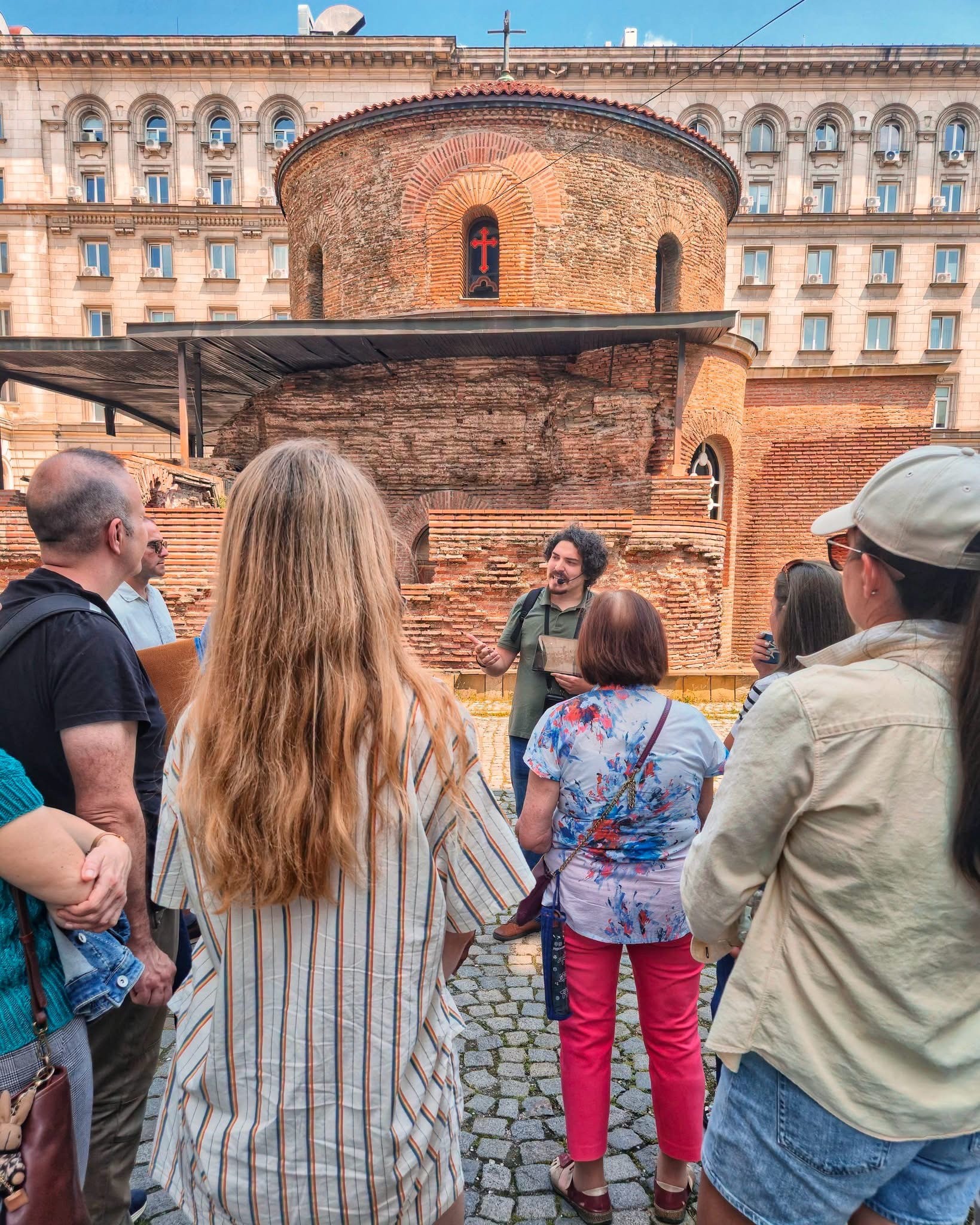
“This is the most romantic period in our history. For many years, it was ignored.”
Viktor Topalov is a local historian: a profession that most people associate with the school subject “local history” and immediately understand what it entails. He studies a specific area: his hometown, Sofia. But the way he does it is far from dry academicism. His inspiration comes from Dragan Tenev’s book Sofia of Three Hundred Thousand and I Between the Two Wars, a text written not with historical facts, but with personal memory and a human voice. It is precisely this that allows Victor to understand what kind of storyteller he wants to be.
This is how "Bohemian Sofia" was born. A platform dedicated to the period between the Liberation and World War II. The reason for choosing this era is simple: for Victor, it is the most romantic period in Bulgarian history. Decades during which the capital was transforming into a modern European city, and people lived with the sense that they were building something new. For a long time, these stories remained out of the public eye for political reasons. Today, “Bohemian Sofia” is bringing them back into the spotlight.
As for the ability to tell a story in a way that touches people, Victor is adamant that it can be learned. “If football hadn’t been invented, Maradona wouldn’t have been a ‘talented football player,’” he says. Victor’s grandfather, who wrote poetry and short stories, encouraged him from an early age. Practice, diligence, and the encouraging words of loved ones, and later, of readers, did the rest.
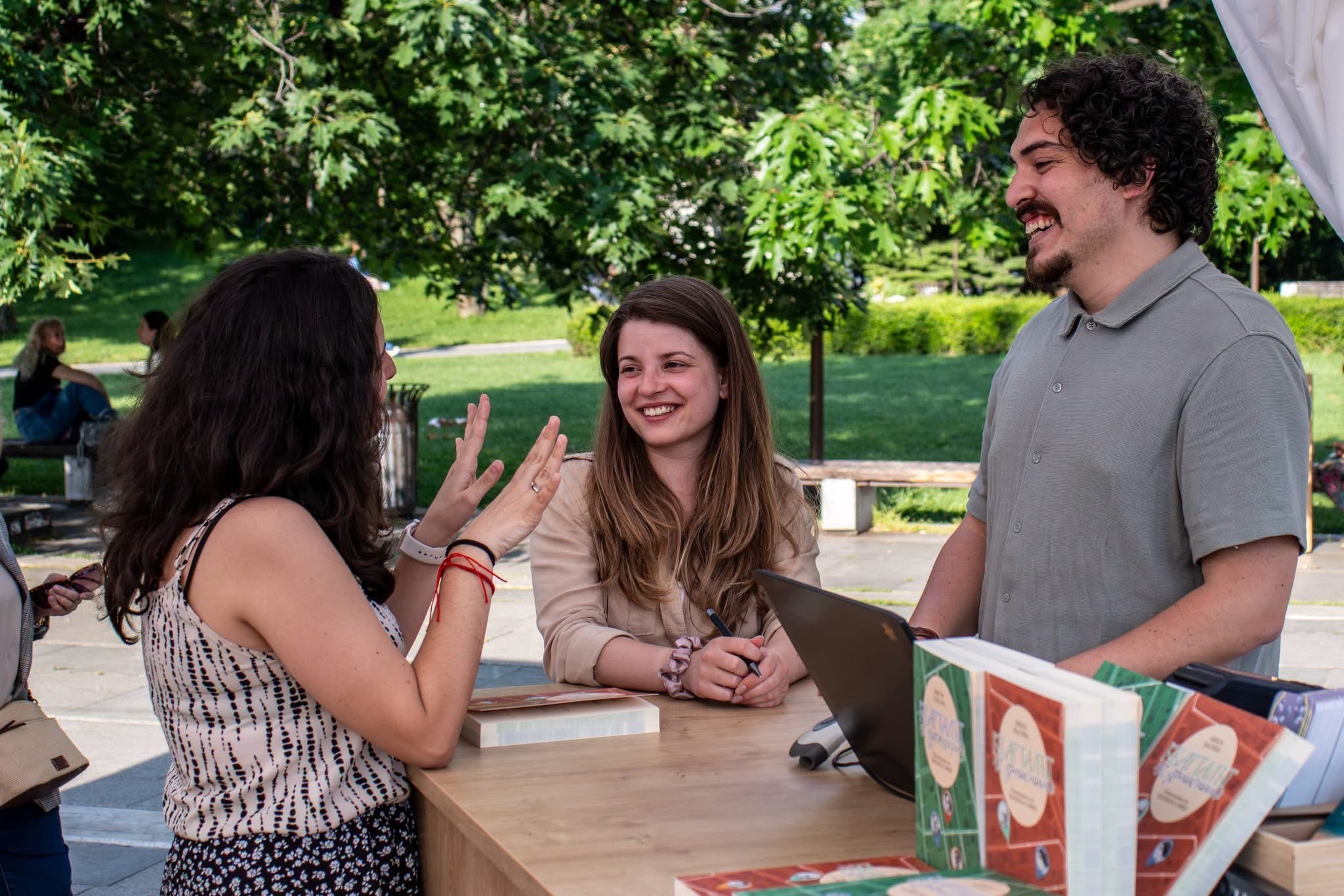
“The people of that era knew that their voices sounded louder together.”
One of the things that Viktor Topalov values most about the period he researches is the desire of the people of that time to come together. There was hardly a profession without its own organization or association, from tailors to writers. Literary circles, theater clubs, professional unions: people back then intuitively sensed that community multiplies the power of the individual voice. It was precisely from these initiatives that some of the most significant cultural events, which all of Sofia still talks about today, were born.
The “Bohemian Sofia” platform follows a similar principle. During the COVID pandemic, Victor’s virtual talks attracted thousands of people eager for stories full of character and authenticity. Then came the walking tours, the in-person lectures, and the books. Victor wasn’t sure that Sofia’s residents would be willing to set aside their free time after work, but the audience showed up. And it keeps coming.
The latest book, “The Quarter of the Painters. The Quarter of the Artists”, co-written with Nikol Valcheva, explores precisely this logic of coexistence. Relatives, friends, rivals: people united not by ideology, but by a shared bohemian era in two cozy neighborhoods of the capital. Readers can literally tour these places with the book in hand and get to know their famous residents.
If Viktor could talk to one of them, it would be the caricaturist Aleksandar Bozhinov, “one of the most likable people in old Sofia”. It was precisely his memoir that sparked the interest in exploring “The Quarter of the Painters”, and the walking route in the book begins at his home at 6 Nikolay Pavlovich Street. Victor says with a smile that he’s certain the conversation would have made him dream of life in a bygone era filled with the scent of linden trees and… kebapcheta.
