Personality
Calling
Category
Personalities
„Sometimes an empty wall is simply an invitation.“
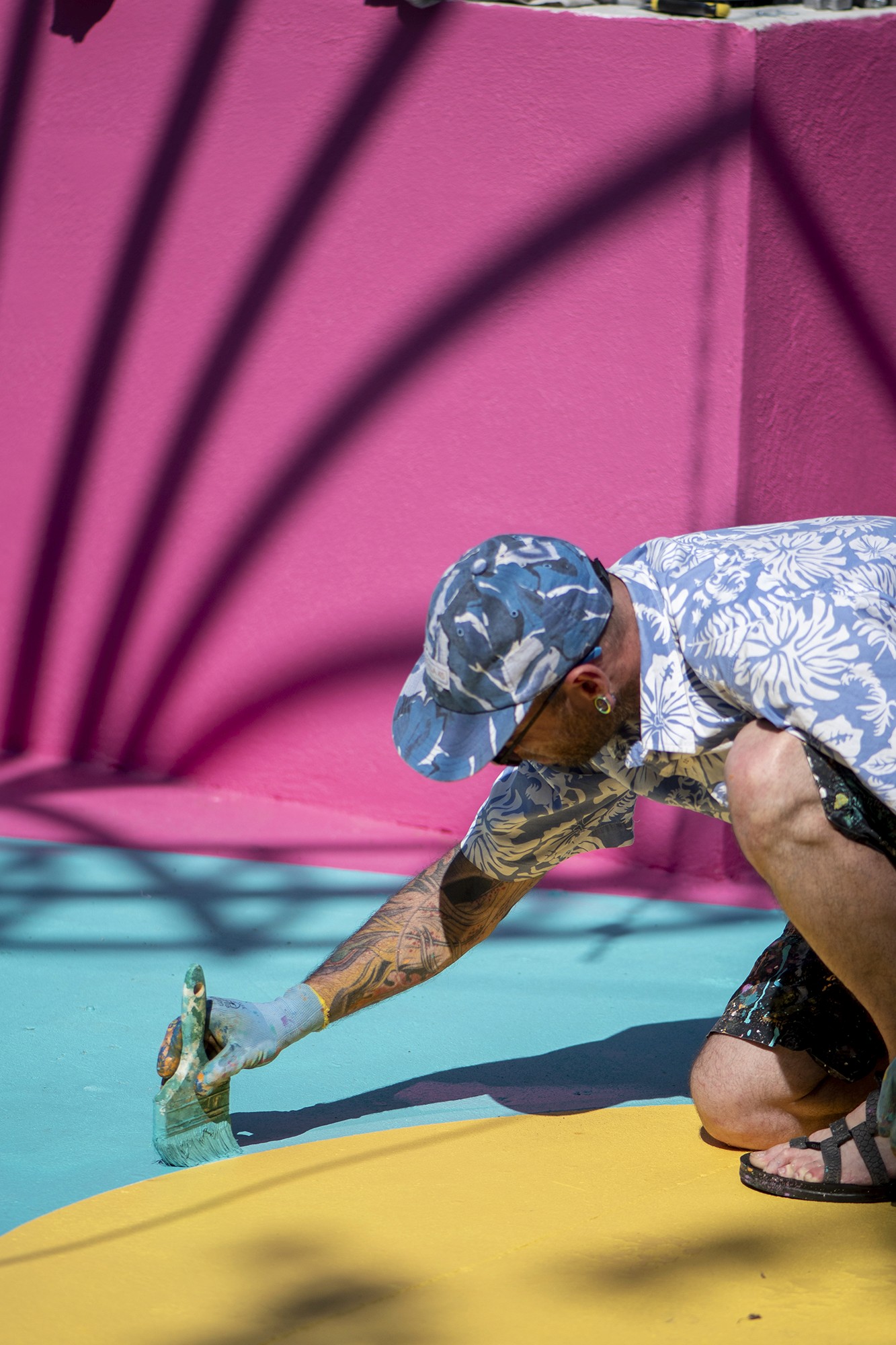
In the early 2000s, Sofia seemed like a sterile environment for graffiti culture. Empty surfaces, no traces of spray paint, and a city center that remained almost completely “clean.” What did exist was scattered across neighborhoods like “Nadezhda.” It was there that young Nikolay Petrov (GLOW) first saw his peers painting on the walls. That changed everything. One day he watches; the next, he’s already holding two spray cans in his hand and trying to leave his first mark on the city’s concrete landscape.
Inspiration strikes instantly, and the desire grows into years of experimentation with friends. At the same time, the internet begins to connect local scenes across Bulgaria, opening up new opportunities for collaboration, friendship, and community. Graffiti gradually becomes a recognizable urban phenomenon, evolving from an underground protest into a visible part of the city’s cultural landscape.
"The path becomes clear when you stop trying to meet other people’s expectations."
Before art became a career, Nikolay took a completely different path. Majoring in economics at the University of National and World Economy was supposed to be the “safe” choice, dictated by his parents’ expectations. But already in his first year, it became clear that numbers could not replace his need for creativity.
Alongside his lectures, his graffiti continued quietly, insisting on its place in daily life. Nikolay never stopped drawing or meeting with other artists. It is they who steer him toward drawing lessons—a step that gradually changes the course of his life. His curiosity about visual thinking leads to a bold decision: to leave economics behind and apply to the National Academy of Arts.
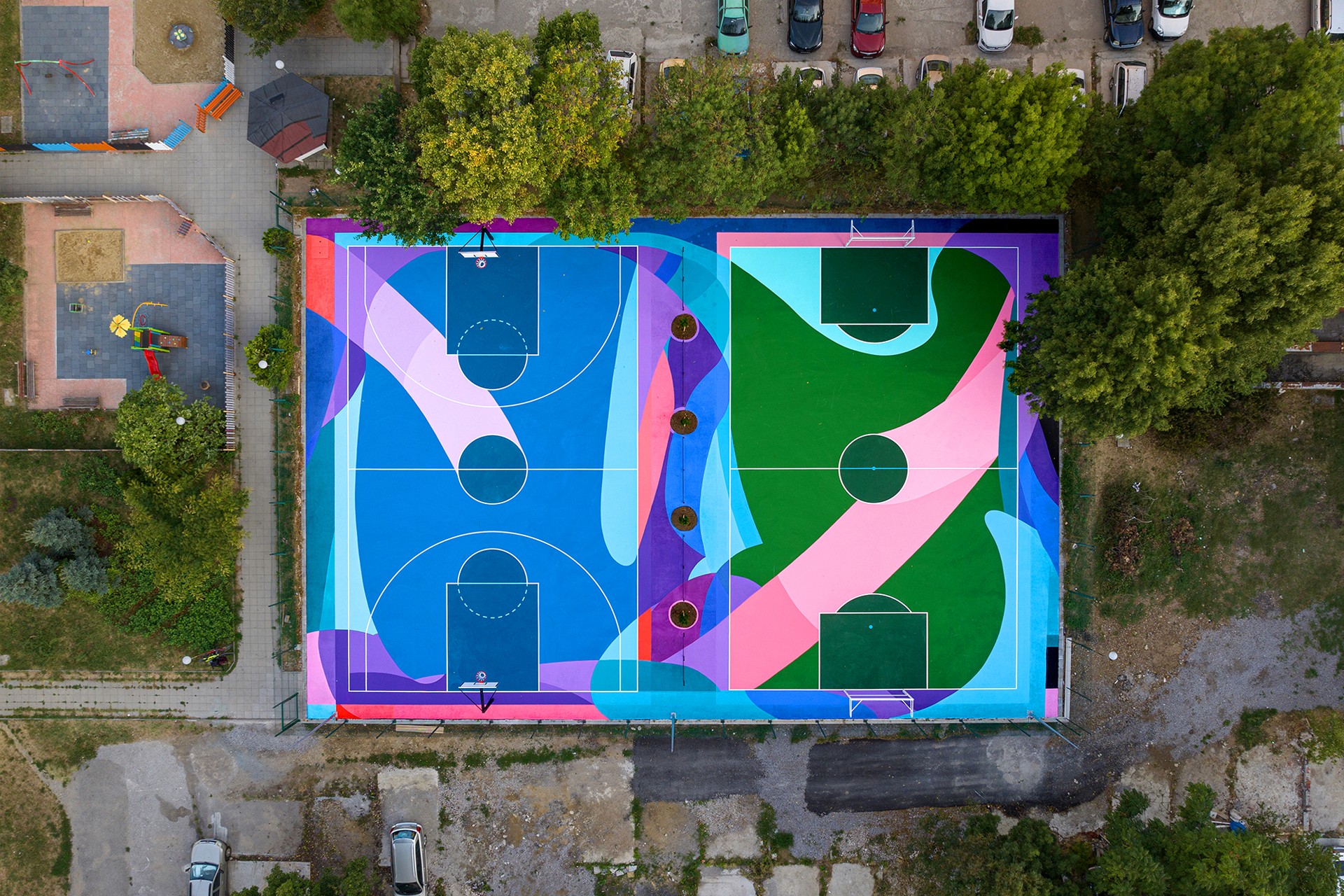
The academy opens up new horizons—art history, composition, design, and spatial thinking. Paradoxically, styles such as minimalism and conceptualism, which initially seem incomprehensible, gradually begin to influence his own work. The most important lesson, however, remains simple: development depends on one’s own motivation. The more you experiment and explore, the more you learn. This is a principle that Nikolay continues to apply today as a full-fledged graffiti artist. He increasingly challenges himself to go beyond traditional walls, with one of his most personal projects being basketball courts transformed into large-scale artistic compositions. The idea stems from his own childhood: years spent playing on neighborhood courts that were often neglected.
The first project of this kind, which he realized at a festival in Pristina, turned out to be a turning point. The very next day after the opening, the space filled with joyful children—a moment that shows just how powerful art can be when it is part of everyday life.
"The city is the biggest gallery."
Historically, graffiti began as an underground art form. Today, however, the picture is gradually changing. More and more cities around the world are using street art to transform abandoned spaces and breathe new life into the urban environment.
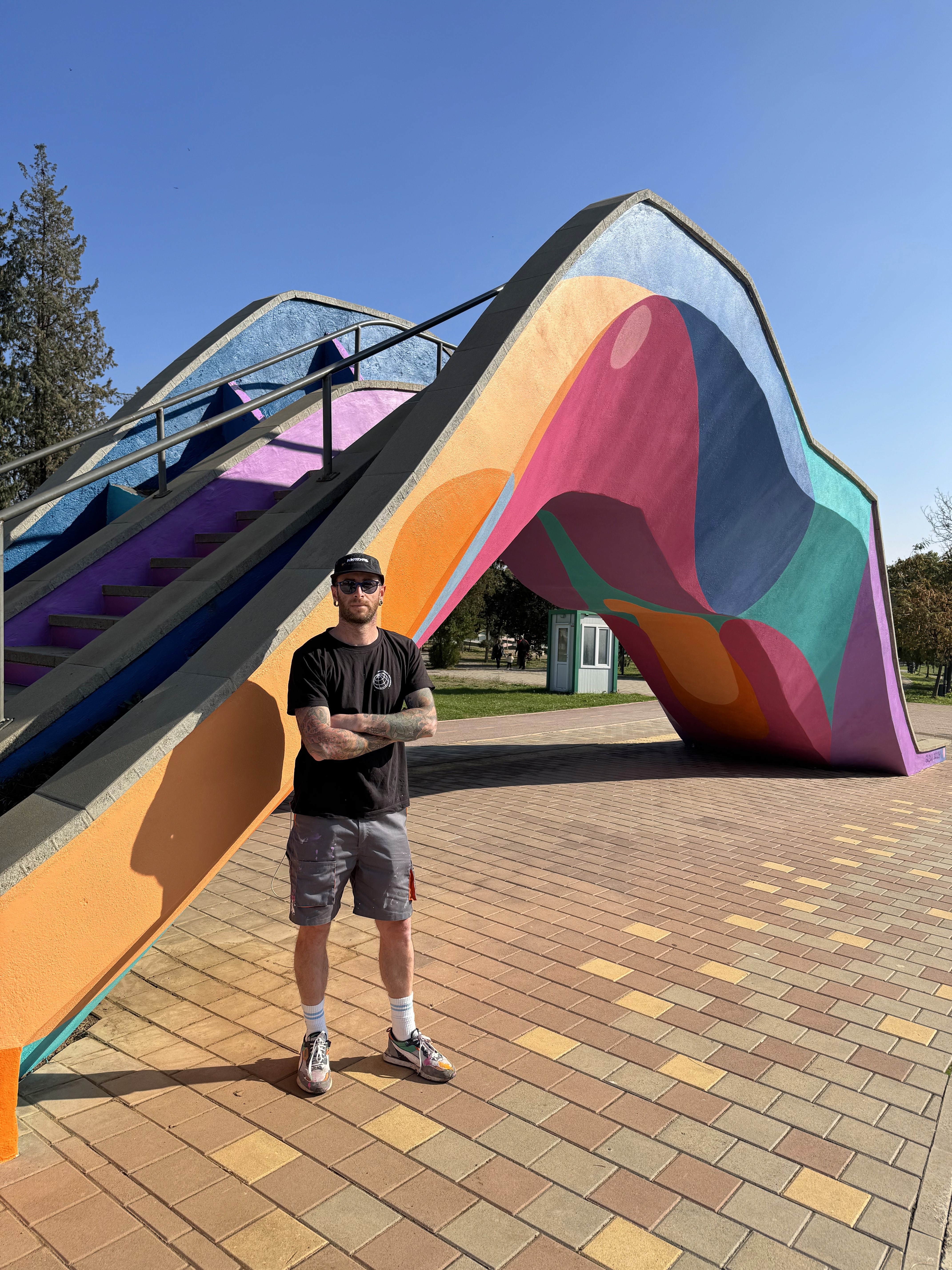
A similar transformation is also taking place in Bulgaria. Large-scale murals, festivals, and public projects demonstrate that graffiti can be an organic part of the cultural landscape. This progress reached a symbolic milestone in 2020, when Nikolay became the first graffiti artist to create a mural in the atrium of Kvadrat 500—an institution that had long kept its distance from street art. The moment is indicative of the shift in attitude toward this form of creativity. For Nikolay, this is no compromise; after all, the world’s best-selling contemporary artist is a graffiti artist.
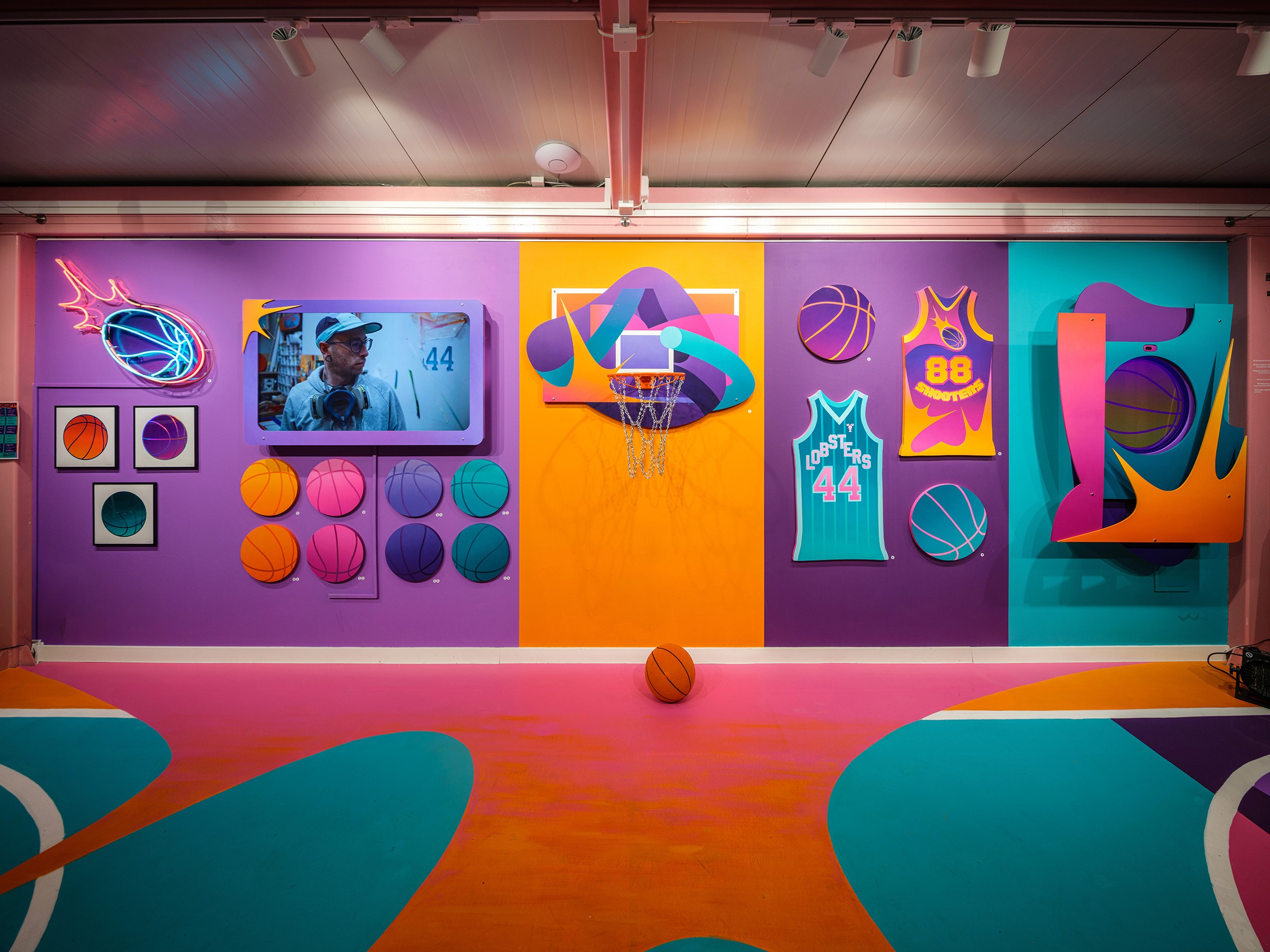
Years of successful projects in Bulgaria and abroad followed, through which Nikolay cemented his reputation in the graffiti scene. One of them is his most recent exhibition, SHOOT, at L44 Gallery. The main focus is the connection between sports and street art through the concept of the basketball shot—the “hot ball,” concentration before the throw, and the moment of release. In this way, Nikolay manages to draw an analogy between the two worlds: that moment of silence before the ball leaves the hand is the same as the moment before the spray touches the wall. Both actions require the same stillness.
Nevertheless, for Nikolay, the goal is not necessarily to convey a strictly defined message. Sometimes the most impactful work simply exists in space—visually and freely—so that every passerby can interpret it in their own way. At the same time, Nikolay has long since grown “numb” to the crowd’s mindset, looking ahead to his next dream challenge: a swimming pool, a skate park, or an airport. Places on an unconventional scale, where art will not be decoration, but architectural thought.
And to future generations of graffiti artists, Nikolay offers simple but important advice: make sketches first. Not out of fear, but out of respect for the wall. The scale may be overwhelming, the spray technique unpredictable, but true freedom comes after thousands of hours of practice. Because improvisation is a privilege of experience.
Photos: Mikhail Novakov, Marin Kafejdzhijski, Dimo Shekharski